Dylan Ciamacco, 25, first went to the Los Angeles
outpost of international megachurch C3 as a teen. His mom thought a lot
of the young people there—in skinny jeans, chunky sweaters, and leather
jackets—dressed like him. He’d emerged recently from a “sick” (as in
awesome) atheist phase, he says, mocking himself, and was looking to go
back to church.
A
typical service, Ciamacco says, opens with a band that would fit in at
the Coachella festival, were it not for the Jesus lyrics: “What a
savior, my Redeemer/Friend of sinners, one like me.” (In one podcast, a
pastor, sermonizing about society’s obsession with markers of
achievement, uses an Internet-approved term of endearment to channel his
audience, asking, “When am I going to get my own bae?”) At the end, a
member of the “worship team” will call on parishioners to tithe and pass
the collection plate. But not all people reach into their wallet. Many
take out their phone instead.
Ciamacco
gives each week, using the Tithe.ly app. It takes fewer than five taps,
and built-in geolocation means he can contribute at any of the 1,000
churches that subscribe—a feature that’s especially useful around
holidays like Easter, when many people travel. Tithe.ly lets worshipers
set up automatic recurring payments, but because Ciamacco’s paycheck
fluctuates with his work as a freelance video producer, he tithes on
demand—usually about 10 percent of whatever he’s brought in.
Although
churches are saying a collective hallelujah that a new generation of
devotees is filling pews, a youthful congregation has its limitations.
Twentysomethings might find religion, but not a lot of them have found
that six-figure job. They don’t carry cash—and what, exactly, is a
personal check? Still, about a quarter of them use mobile payment apps
such as PayPal and Venmo regularly, according to a recent Accenture
survey. And enormously popular services such as Seamless, Uber, and
Amazon.com have normalized one-tap payments—91 percent of millennials
use their phone to buy something at least once a month, market-research
firm Statista says.
Tithe.ly
is one of a handful of apps leveraging that spending behavior for the
good of the church. Pushpay, which about 3,000 congregations employ,
works similarly; worshipers decide whether to donate to a general budget
or a specific program the institution designates. Another, EasyTithe,
features a text-to-give option. It also provides technology for a
Square-like credit card reader to await the faithful in church lobbies.
Regardless of which app a congregation chooses, the point is
convenience. “We call it frictionless giving,” says Dean Sweetman,
Tithe.ly’s co-founder and a former minister at C3 Atlanta. He designed
the app with C3’s wallet-light clientele in mind: “We see people giving
all times of day and night. Nothing stands in the way.”
Apparently
not. Churches using tithing apps report they see more donations, more
often, from more people. (Subscribing establishments either pay a
monthly fee or allow the app to collect a cut of each gift. Tithe.ly
lets donators cover this; Pushpay promises churches a 5 percent spike in
donations or their money back.) But getting parishes with pastors and
members older than 40 to sign on has been more Job-like. Tradition is
hard to overcome. “In some churches, if you let the plate go by and you
don’t put something in, you feel a little guilty,” says Brad Hill, who
works in platform services at EasyTithe. To combat that, some
congregations print out cards that say, “I gave online.”
Ciamacco’s
friend James Crocker, also 25, says it’s much more awkward to donate
the old way: “Putting your personal credit card details on a piece of
paper and leaving it there? For millennials, there’s no way.” Ciamacco
agrees, if for different reasons. “I was so anti writing my name on an
envelope—it was a holier-than-thou thing,” he says. “When Tithe.ly
came out, I was like, ‘Hell, yeah.’ ”
Culled from Bloomberg.com
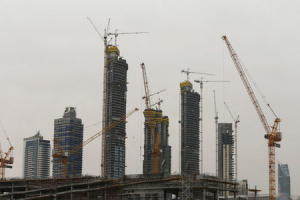
Buildings that are under construction are seen in Dubai, UAE March 7, 2016. REUTERS/Ahmed Jadallah
DUBAI (Reuters) - Dubai developers
are pressing ahead with their construction plans despite expectations
that property prices will fall yet further this year, undaunted by
memories of a 2008 crash.
Industry consultants say
that while sales volumes have slumped in the emirate, structural changes
to the market such as tighter regulations together with fewer
speculators and developers should ensure a much softer landing this
time.
But others worry about ripple effects from the
dive in oil prices, even though Dubai is a small crude producer
compared with fellow emirate Abu Dhabi, and wonder how all the projects
that are being announced will be funded.
Dubai property prices have been more volatile in the past decade than in other centres.
(GRAPHIC: House prices in Dubai, London and Singapore: http://reut.rs/1RnHt8d)
Residential prices in the emirate fell 50 percent from a
third-quarter 2008 peak to mid-2009, suffering a second downturn in
early 2010, industry consultants Cluttons estimate.
Prices then rebounded from 2011 following an influx of money and
people displaced by uprisings in several Arab countries, recovering to
within 18 percent of 2008 peaks.
But values
slipped again from late 2014. Cluttons reckons they fell 3-5 percent in
2015 and forecasts a similar drop this year; rivals CBRE say prices
declined about 15 percent last year and predict another 10 percent drop
in 2016.
This seems to have swayed developers little.
Emaar Properties says it will not change its plans despite
sales revenue falling 28 percent to 7.51 billion dirhams ($2.04
billion) in the first nine months of 2015.
"Emaar is progressing as scheduled with all its projects launched," said
a spokesman for Emaar, builder of the world's tallest tower, the Burj
Khalifa.
The company, one of four big players in the
Dubai market, has a backlog of projects worth 24.1 billion dirhams in
the wider United Arab Emirates.
"Sales
enquiries have continued to be robust, led by strong interest from
regional and international investors," said the spokesman.
ECHOES OF 2008
Property markets can be driven as much by sentiment as
supply and demand, so such overt bullishness is perhaps understandable.
However, it ignores a 19 percent decline in Dubai unit sales and a 24
percent drop in the combined sales value in 2015, CBRE estimates.
It also echoes 2008 when that October the developer
Nakheel announced plans to build a kilometre-high tower, which at almost
200 metres more than the Burj Khalifa would be a global record.
Barely a year later, Nakheel sought to restructure about
$11 billion in borrowings and property prices were in free fall. Today a
Dubai metro station is named after the lofty project, but the tower has
yet to materialise.
Dubai has doubled property
transaction fees and imposed tougher deposit requirements for mortgage
borrowers. While this has helped to prompt the current downtrend,
inflicting such short-term pain may ultimately lessen volatility by
minimising speculative trading.
This marks a
significant change from 2008. "The dynamics of the market this time
around are vastly different ... The fundamentals are a lot stronger,"
said Faisal Durrani, partner and head of research at Cluttons.
DAMAC Properties, Dubai's largest independent developer, also
says it has not slowed construction as there is demand waiting to be
met.
"There will continue to be an under-supply of
completed units in the market; based on Dubai's economic growth, demand
should outstrip supply," said a DAMAC spokesman. "It's very much
business as usual."
Dubai officials have remained
optimistic on economic growth in the emirate which has diversified into
areas such as tourism more than larger oil exporters. In December, a
government official estimated 2015 growth at around four percent, close
to levels of recent years.
However, the UAE has said
it will be hard to achieve growth of more than three percent across the
emirates this year.
The spectre of over-supply
still haunts the property market after the crash, which was partly due
to an abundance of units being completed almost at the same time.
To avoid a repeat, developers are widely thought to delay
handing over units when they are completed, although of course this
means they get no money from them until a sale goes ahead.
Over the last five years only about 35 percent of residential
units slated for handover in a given year were delivered to buyers,
consultants JLL estimates, with sales delayed until subsequent years.
OIL IMPACT Oil is thought to constitute only about 4-5 percent of
Dubai's economy, but the effect of the crude price slump will be greater
than this figure implies.
"There's a ripple
effect (into) office demand, the amount of trade hotels get, business
activity, amount of flights, retail spend," said Alan Robertson, JLL's
MENA chief executive. Lower oil receipts have tightened liquidity.
Government deposits in the UAE banking system fell by 56 billion dirhams
in the 12 months to September 2015, National Bank of Abu Dhabi
reported.
"This will have a direct impact on the
mortgage market, which is already very restrictive," said Clutton's
Durrani.
Project funding is likely to be a problem this year.
"There are a lot of new projects being announced but where
are they all going to get the money from?" said Craig Plumb, JLL MENA
Head of Research.
Of the four developers that
dominate in Dubai, three - Emaar, Nakheel and Dubai Properties – are
ultimately state-controlled, making it easier to coordinate supply.
Currency fluctuations are another factor. Foreigners
accounted for four-fifths of the combined value of Dubai property
purchases in 2015, CBRE says, with Indians, Britons and Pakistanis among
the biggest non-Emirati buyers.
The dollar, against
which the UAE dirham is pegged, has gained about a fifth versus the
euro and sterling since mid-2014. The Indian rupee has likewise lost
ground.
This has made Dubai property more expensive
for potential buyers with money in those currencies, but has also offset
the drop in values for existing owners from those currency zones.
"People who really want to sell are willing to accept
considerably lower prices," said Alexander von Sayn-Wittgenstein, sales
director at luxury property broker Luxhabitat.
"The official price may be the same but when a buyer makes an offer that
is much lower, the seller is more flexible and will likely accept a
price they wouldn't have a year ago."
Gulf property
markets have generally weakened although Dubai is most volatile because
it has made the biggest gains.
"The underlying
factors are broadly the same - such as oil prices, lower state spending
and the need for governments to raise taxes which will add to
inflationary pressures," said JLL's Plumb.
Most analysts predict Dubai's hosting of the Expo 2020
exhibition will help the residential market bottom out over the next 12
months. Demographic trends are also favourable, with the city's
population forecast to double to 5 million by 2030.
If correct, this will help construction. "We (would) need another
city the size of current Dubai," said Durrani. "This suggests that
Dubai's development story still has a long way to go."
(editing by David Stamp)
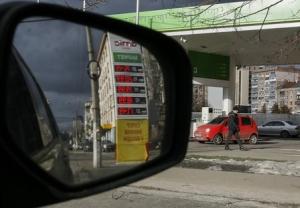
A man walks past "Amic" fuel stations displaying prices of 0.77 USD and 0.81 USD per litre …
SINGAPORE (Reuters) - Oil prices
jumped on Monday, extending a rally that has lifted crude benchmarks by
more than a third from this year's lows, as tightening supply and an
improving global outlook strengthened the sentiment for a market
recovery.
Front-month Brent crude futures were
trading at $39.42 per barrel at 0620 GMT, up 1.8 percent from their last
settlement and over a third higher than their January low, when prices
fell to levels not seen since 2003.
U.S. West Texas
Intermediate (WTI) futures were trading at $36.59 a barrel, up 67 cents
from the last close and 40 percent above February lows.
"It looks at this stage as if it (oil) has formed a little bit of a
bottom and perhaps we're going to see a sustained price in the $30s,
maybe trending back up to $40 dollars at some point," said Ben Le Brun,
market analyst at OptionsXpress.
"The macro picture
takes all corners of the globe into account, and those corners seem to
be improving ... and that's where I'm seeing the oil price tick higher."
Analysts said that strong U.S. payroll data had pushed
markets on Friday and early Monday, but that attention was now shifting
to China where the National People's Congress opens its annual session
this week.
On the supply side, U.S. energy firms cut
oil rigs for an 11th week in a row to the lowest level since December
2009, data showed on Friday, as producers slash costs.
Drillers removed eight oil rigs in the week ended March 4, bringing
the total count down to 392, oil services company Baker Hughes Inc said.
Beyond a tightening supply outlook, traders said
that shifting sentiment was also lifting prices as large amounts of
short positions were being closed and bets rising prices opened.
Ric Spooner, chief market analyst at CMC Markets said
"there's a good prospect that Brent could hit $40 ... (it) could easily
do it in the next trading session."
Despite the
recent price rises and the generally more bullish outlook, analysts
warned that the general glut remained in place and prices could still
drop back.
"Upside should be limited by bloated global inventories and producer
hedging. Moreover, we worry that this latest oil bounce shares many
features of the 2Q15 false oil rally," Morgan Stanley said on Monday.
(Additional reporting by Manesha Pereira; Editing by Joseph Radford and Tom Hogue)